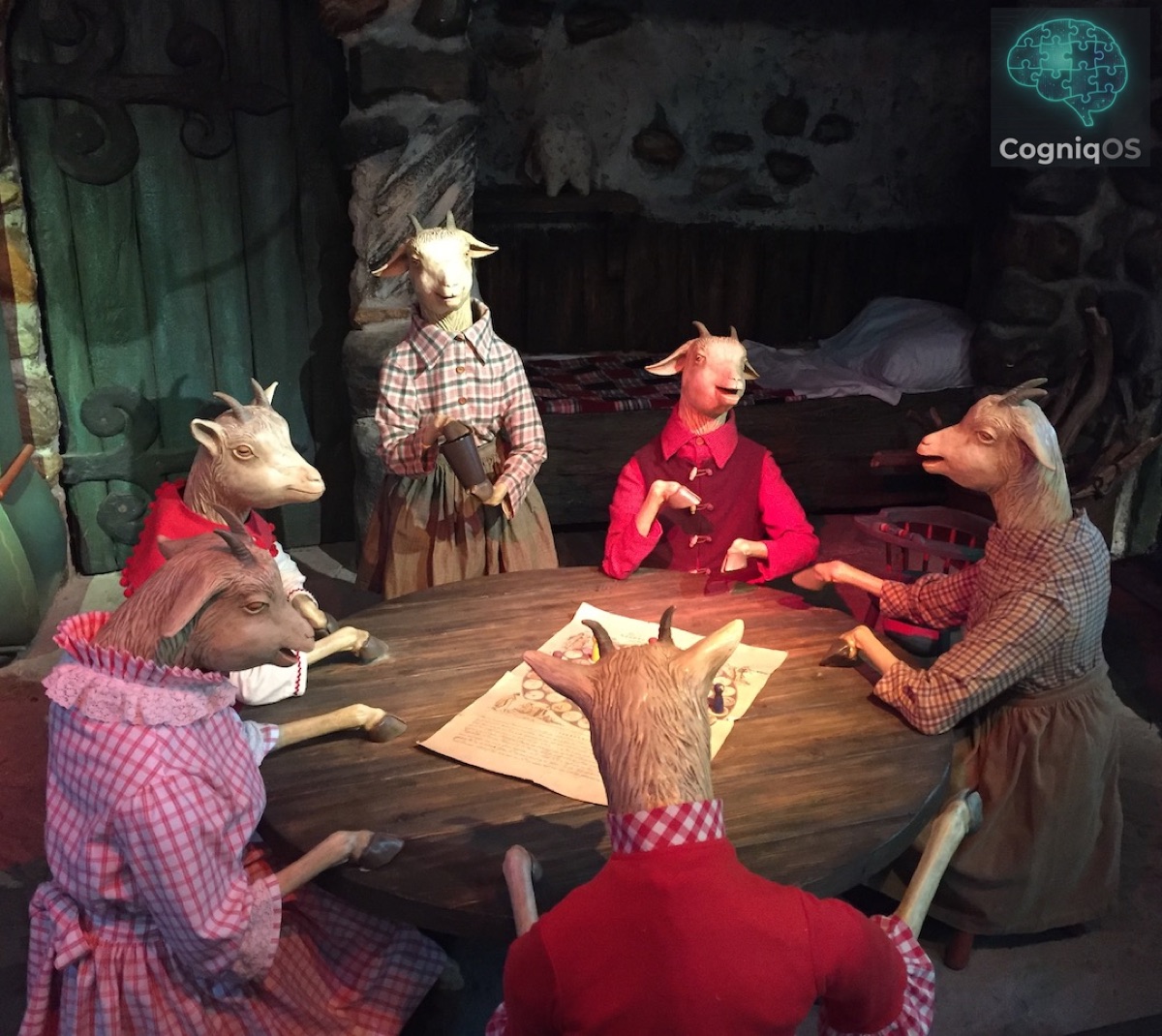
The story feels discovered. It was invented.
Two companies follow the same playbook. One catches a macro tailwind and becomes a case study. The other doesn't and quietly closes. We read about the first one. We explain it.
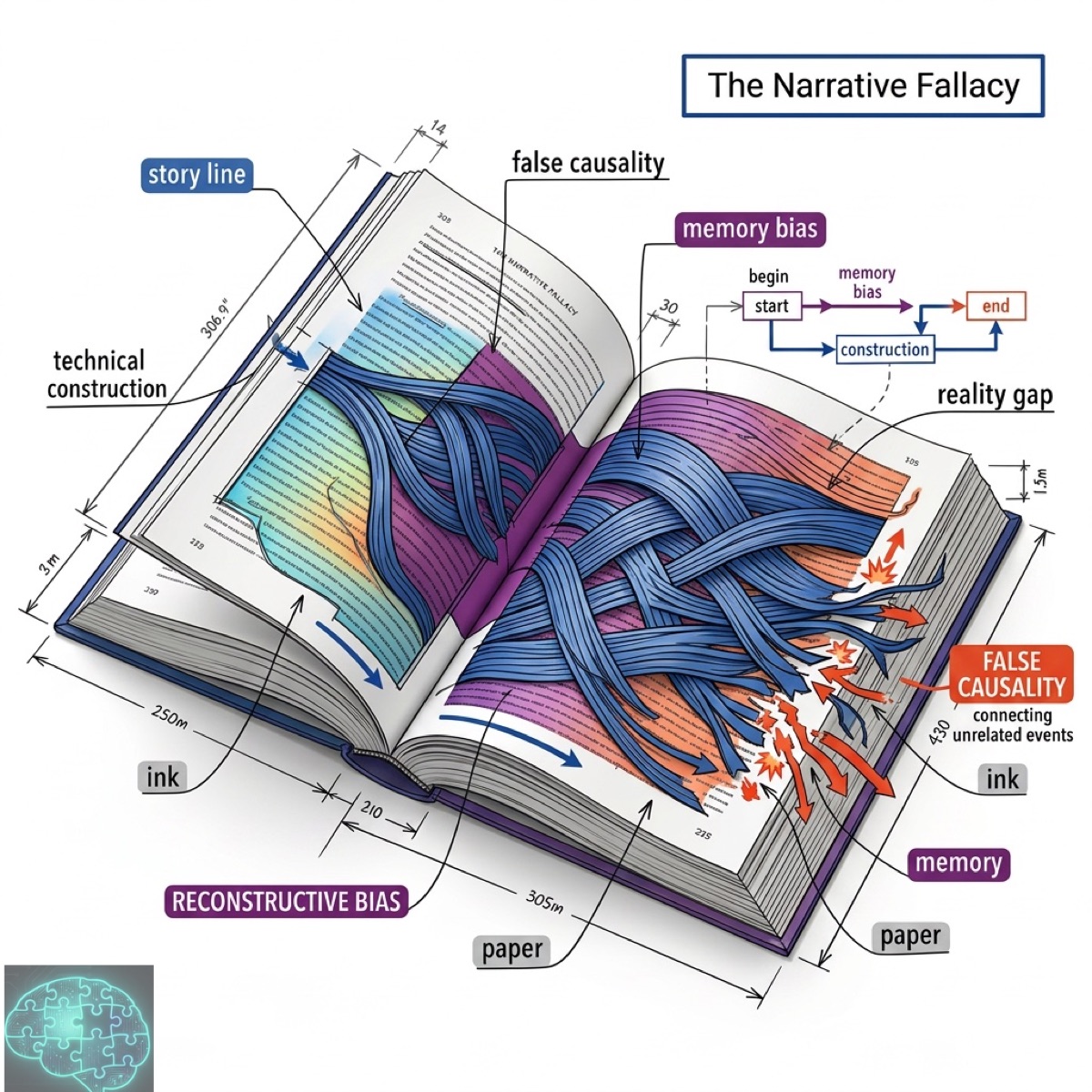
The brain struggles to tolerate randomness. Given a sequence of events, it builds a causal story - assigns credit and blame to agents, fills in intention and experiences the constructed narrative as something that was genuinely in the data. The story doesn't feel invented. It feels found. Everyone knows stories can be wrong. What's less obvious is that narratives feel explanatory even when they predict nothing - and that the feeling of understanding is often the bias itself.
Nassim Taleb named the fallacy in The Black Swan. The mechanism he was pointing at had been running long before he named it.
By the end of this, you'll know why causal stories feel found rather than invented. And why that makes them dangerous.
Hindsight bias is related but different. The narrative fallacy isn't just about knowing the outcome afterward. It's about the brain constructing a causal story - assigning intention, credit and inevitability - that feels found rather than built. The story feels explanatory even when it predicts nothing.
How it works
Narrative and causality are not the same thing. A sequence of events supports many different stories. The one that gets told is the one that fits the outcome that happened - selected backward from the result.
The same facts that explain a success usually also appeared in contemporaneous failures. The story is built from the survivor. The identical story in the failure gets no attention because failure doesn't generate Harvard Business School case studies.
Also shows up in
- Business strategy: post-hoc explanations of corporate success are often weakly correlated with future performance, because the strategies described as causes also appeared in failures
- Investment performance: narrative explanations of returns that may have been largely market beta
- Career accounts: 'I got here because...' told backward from outcomes that involved substantial randomness
- Historical explanation: clean causal chains imposed on events that had hundreds of contributing factors
Countermeasure
Ask:
How many other sequences of events would have produced the same story?
If the answer is many, the story is less explanatory than it feels. Search for the cases that followed the same pattern and ended differently. Then test whether the story predicts new cases - if it can't, it's description, not explanation.
Take one business or career lesson you rely on and ask whether the people who followed the same strategy and failed have been counted in your evidence.
Where it hurts most
- Business case studies and investment thesis construction. Phil Rosenzweig's Halo Effect work showed that once a company performs well, observers attribute the success to its strategy, leadership and culture - reading those qualities backward from the results. The story adjusted to the outcome. The lesson drawn was about the outcome, not the decision.
When it doesn't apply
Sometimes the narrative is explanatory. Post-hoc explanation isn't always post-hoc rationalization. The question is whether the causal claims in the story can be distinguished from the story's rhetorical fitness. A story that explains a success should also predict comparable cases - and few business narratives survive that test.
Danger zone
Narrative Fallacy + Confirmation Bias + Affect Heuristic - a coherent story feels like an explanation and demands no further scrutiny, Confirmation Bias makes details that fit the narrative more memorable than contradicting ones and Affect Heuristic makes emotionally resonant stories feel more accurate than statistically equivalent ones that lack a protagonist.
Also a component of Convergence Trap 10: The Narrative Trap →
Also mapped in Cross-Domain Transfer: Military Strategy & Geopolitics → · Also mapped in Cross-Domain Transfer: Finance & Investing → · Also mapped in Cross-Domain Transfer: Education & Learning →
Stress test
Three investors made identical sector bets using the same reasoning at the same time. Two lost significantly. One didn't invest. The outcome selected the narrator. The narrative was constructed after the selection.
Testable prediction
Give people identical statistical outcomes with and without a narrative explanation. The narrative version gets rated as more predictable, more preventable, more inevitable - even when they can see the statistics show identical variance. Narrative creates false determinism.
Run this audit with your AI
Paste your decision in, and let your assistant audit it through this bias.
You are my CogniqOS narrative skeptic. Bias lens: Narrative Fallacy.

MY DECISION: [paste here]

One decision you're weighing, in a plain sentence - e.g. "Buy the clean story behind why the startup failed?"

What are my options and what does doing nothing cost? (Required.)

(Optional: the story I'm telling about why this happened.)

If another bias fits better, say so before auditing.

If my input is vague, ask me to sharpen it before auditing.

If it contains more than one decision, make me pick one first.

Audit:

1) State the narrative in 2-3 sentences. Make the causal claims explicit.

2) Generate 3 alternative narratives from the same facts, different causal links. If multiple fit, none is "the" explanation.

3) What percentage honestly belongs to luck, timing or coincidence?

Return as: the causal claim + 3 alternative narratives + the luck percentage.

Check next: Hindsight Bias (it makes the result seem inevitable), then Survivorship Bias (only winners narrate).

Keep this in your stack. Next trap in the chain: Hindsight Bias.
Related traps
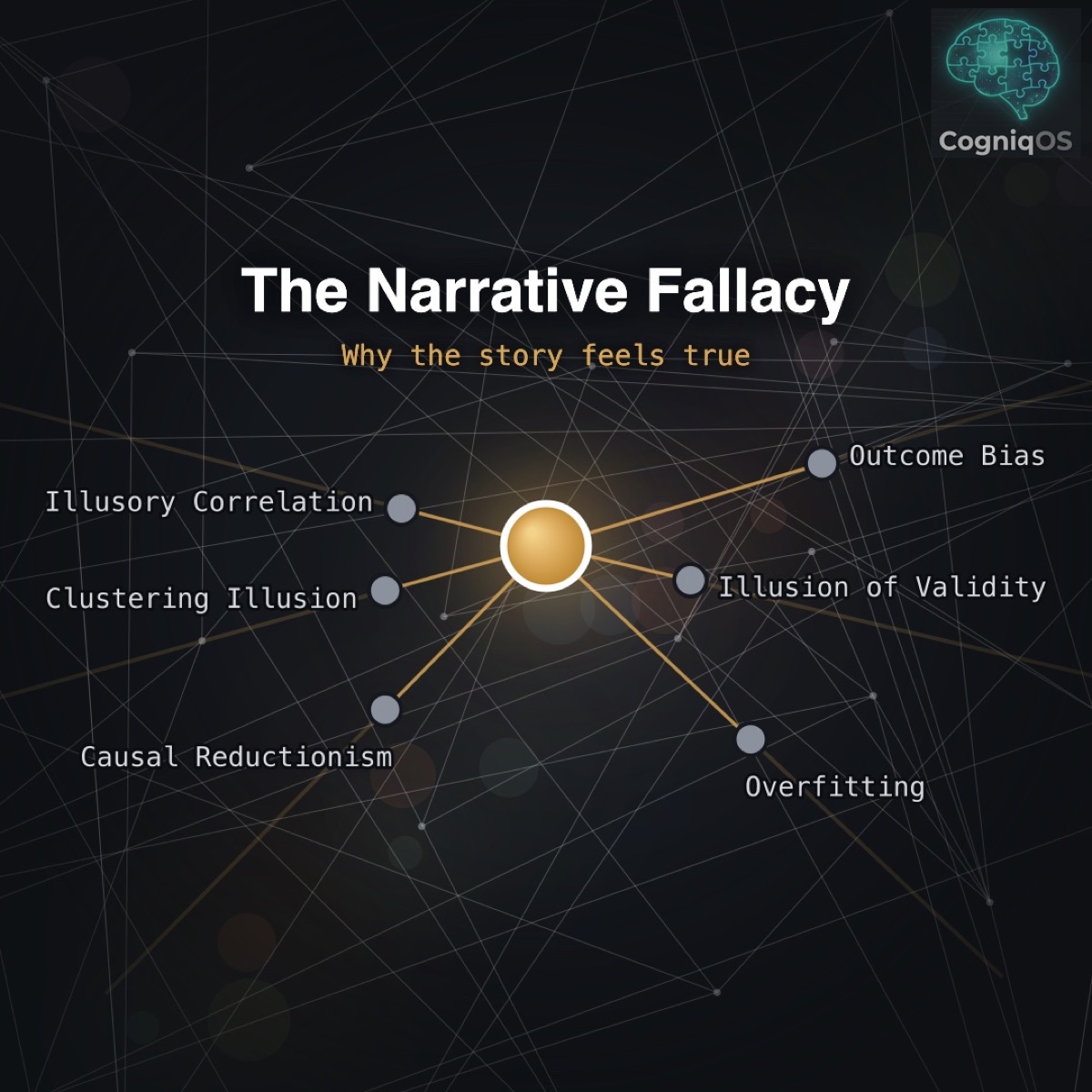
- Hindsight Bias - Memories of prior uncertainty collapse toward the outcome that happened
- Outcome Bias - Judging decisions by results rather than reasoning
- Clustering Illusion - Seeing patterns in random sequences
- Survivorship Bias - Learning from winners whose failures used the same playbook
- Norm Theory - Why unusual events feel more causal than they are, making narrative explanations for rare outcomes feel more compelling than base rates warrant
Also connected in the mapHindsight Bias·Outcome Bias·14 more, locked
Credit & first seen
DiscoveredTaleb, N.N. (2007). The Black Swan. Random House; Kahneman, D. (2011). Thinking, Fast and Slow. Farrar, Straus and Giroux source ↗
Sources
- Taleb, N.N. (2007). The Black Swan. Random House
- Rosenzweig, P. (2007). The Halo Effect. Free Press
- Kahneman, D. (2011). Thinking, Fast and Slow. Farrar, Straus and Giroux
Read next
Entry #34 of 631 in The Lexicon · see the full Lexicon